
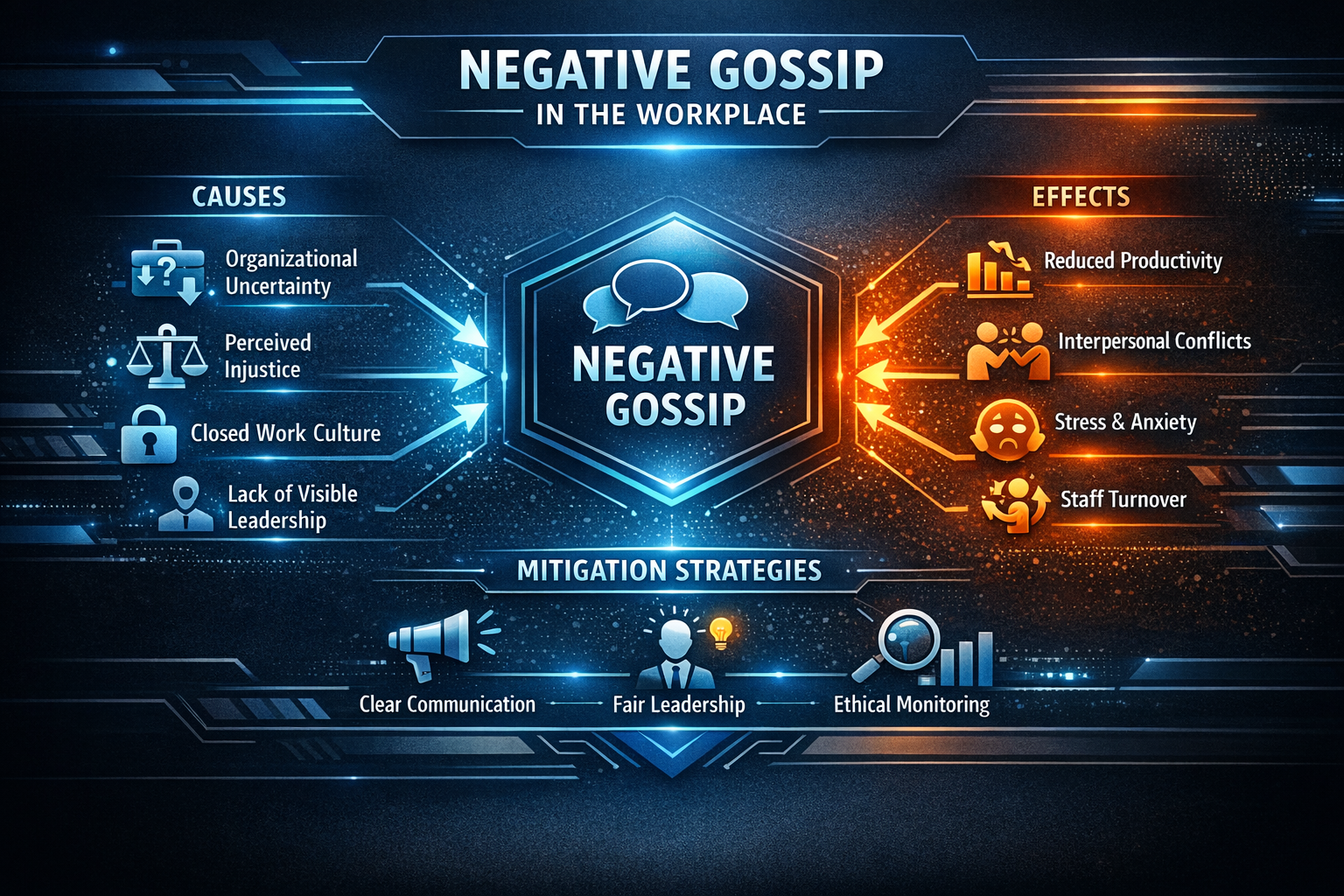
Negative gossip, or workplace rumor, is more than just idle talk; it is an organizational phenomenon that can deeply affect productivity, morale, and talent retention. Often underestimated, its real impact manifests in interpersonal conflicts, stress, and distrust within teams, creating a toxic work environment that companies cannot afford to ignore.
In this article, we explore how this phenomenon manifests, its causes, effects, and the most effective evidence-based strategies to mitigate its spread in the corporate environment.
What Is Negative Gossip in the Workplace?
Negative gossip is defined as the transmission of unverified information about colleagues or superiors with the intention of damaging reputations, creating distrust, or influencing social perceptions. Unlike informal positive exchanges, negative gossip increases organizational tension and reduces team cohesion.
Main Causes of Workplace Gossip
- Organizational Uncertainty: Structural changes, reorganizations, or layoffs create an information vacuum that gossip tends to fill.
- Perceived Injustice: Favoritism, opaque decisions, or unequal treatment generate resentment and rumors.
- Closed Work Culture: Organizations with rigid hierarchical communication encourage employees to seek information outside official channels.
- Lack of Visible Leadership: The absence of clear or accessible leaders increases distrust and the spread of rumors.
Effects of Gossip on the Company
Impact Organizational Consequence:
- Reduced Productivity Employees are distracted and spend time on rumors.
- Interpersonal Conflicts Creates divisions and hostility within teams.
- Stress and Anxiety Affects employee wellbeing and performance.
- Staff Turnover Increased departures and loss of key talent.
Negative gossip is not only a social problem—it is a strategic risk that directly affects business results.
Evidence-Based Mitigation Strategies
- Clear and proactive communication: Inform employees of changes before rumors emerge.
- Fair and visible leadership: Make transparent decisions and explain them to reduce uncertainty.
- Feedback policies and complaint channels: Allow employees to express concerns formally.
- Organizational culture training: Raise awareness about the harmful effects of gossip.
Ethical workplace climate monitoring: Detect rumors early before they spread and act ethically and proactively.
While it is impossible to eliminate gossip entirely, its negative impact can be significantly reduced through strategic interventions.